Staging A Historic Chestnut Hill Home For Today’s Buyer
June 25, 2026
June 25, 2026
If your Chestnut Hill home has original millwork, a gracious stair hall, or a stone fireplace, you do not need to hide its age to win over today’s buyer. In fact, the opposite is usually true. Buyers respond best when a historic home feels bright, polished, and easy to understand, and that matters even more in a market where well-presented listings stand out quickly. This guide will show you how to stage a historic Chestnut Hill home in a way that respects its character while helping buyers picture life there. Let’s dive in.
Chestnut Hill is not a one-size-fits-all market. According to the Chestnut Hill Conservancy, most of the neighborhood sits within the Chestnut Hill Historic District, which was listed on the National Register of Historic Places in 1985 and includes more than 2,600 buildings dating from 1744 to the present.
That historic context changes how you should prepare a home for sale. In many cases, the smartest strategy is not to make the home look brand new. It is to make the home feel well cared for, visually clear, and easy for buyers to appreciate.
Presentation also matters because buyers are active and decisive. Over the three months ending May 2026, Chestnut Hill saw a median sale price of $1,024,655, average days on market of 31, and an average sale-to-list price of 101.5 percent, with 38 percent of homes selling above list price. In a market like that, polished homes can create momentum fast.
Recent staging data makes the case clearly. The latest NAR staging survey found that 60 percent of buyers’ agents said staging affected most buyers’ view of a home most of the time, and 83 percent said staging made it easier for buyers to picture the property as a future home.
That is especially useful in a historic house. Buyers may love old homes, but they still want help understanding how each room lives today. Good staging gives them that clarity without stripping away the details that make the home special.
The same survey found that the most important rooms to stage are the living room, primary bedroom, and kitchen. For many Chestnut Hill homes, you can add the dining room to that list, especially when it helps define the home’s original room sequence and scale.
When you stage a historic home, your goal is not to erase age. Your goal is to let the home’s best features read clearly.
The National Park Service rehabilitation standards emphasize retaining historic character, preserving distinctive materials and finishes, and making any new work compatible with the property. For sellers, that creates a practical staging principle: remove distractions, improve comfort, and highlight original features instead of competing with them.
In a Chestnut Hill home, that often means drawing attention to:
If those elements are visible and the home feels calm and cohesive, buyers can connect with the property much more easily.
Historic interiors often have defining features beyond finishes alone. The National Park Service notes that floor plans, room arrangements, applied finishes, stairs, fireplaces, millwork, plaster, flooring, hardware, and room sequence can all shape a building’s historic character.
That means staging should support the original flow of the house. You want buyers to understand how spaces connect, where natural focal points are, and how rooms can function without forcing a modern layout onto an older structure.
A few high-impact choices usually help:
In many historic homes, less furniture actually makes the architecture feel more luxurious.
If you are deciding where to spend time and money, start with the rooms buyers tend to care about most.
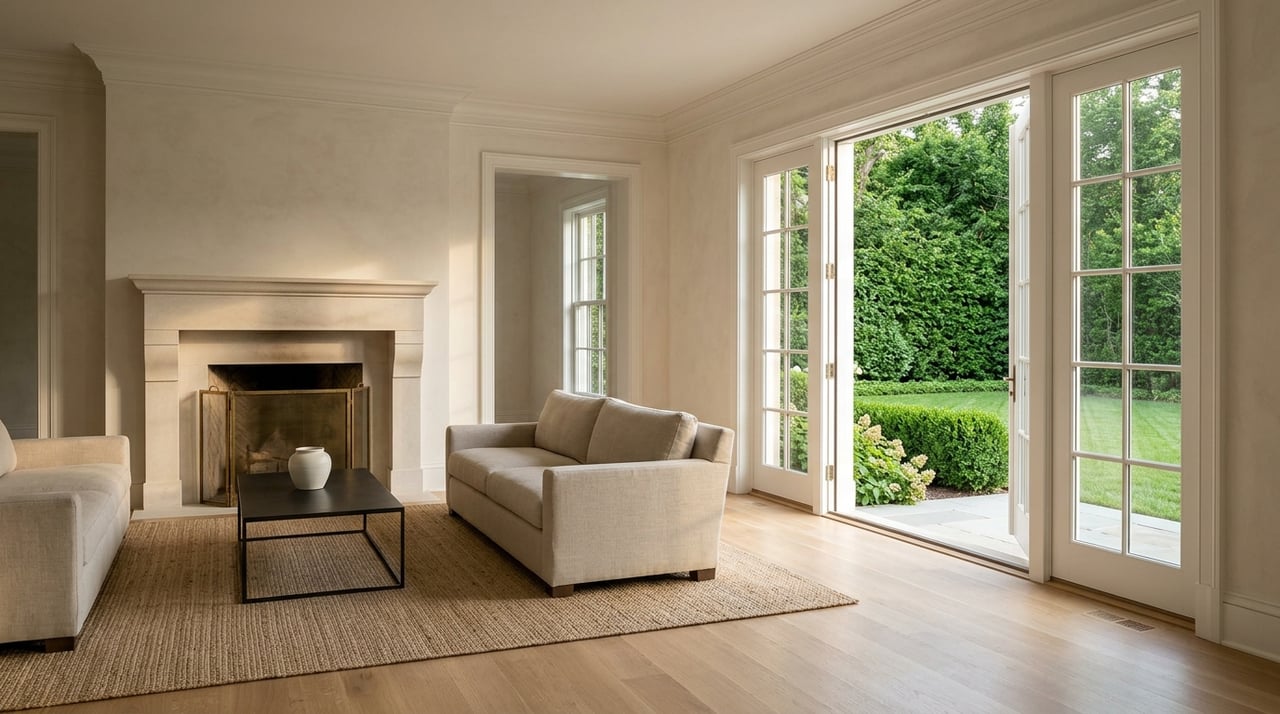
The living room often carries much of the home’s emotional weight. In a historic Chestnut Hill property, this may be where buyers first notice original stone, detailed millwork, deep windows, or a fireplace.
Use seating that feels current but restrained. You want the room to feel inviting and scaled properly, without covering original flooring or crowding architectural focal points.
The primary bedroom should feel restful and spacious. Keep the palette soft, pare back personal items, and avoid heavy furniture that makes the room feel smaller or darker.
Historic homes sometimes have unusual bedroom shapes or window placement. Thoughtful staging can help buyers see those details as character rather than inconvenience.
The kitchen matters because buyers often compare function quickly. In an older home, the right approach is usually not a dramatic overhaul right before listing.
National Park Service guidance on historic interiors supports preserving important room sequences and avoiding major changes that undermine the original plan. In most cases, cosmetic improvements, better lighting, decluttering, and selective hardware updates are more sensible than full reconfiguration.
A formal dining room can be a real asset in Chestnut Hill, especially in homes where entertaining space is part of the appeal. Stage it simply and elegantly so buyers can read the room’s scale and see how it connects to adjacent spaces.
Avoid over-styling. A clean table, balanced lighting, and room to move are often enough.
Before staging even begins, older homes benefit from simple prep that improves brightness, cleanliness, and function. This is also where historic-property rules matter.
If a property appears on the Philadelphia Register of Historic Places, the City requires Historical Commission approval for changes. Most reviews involve facades, roofs, and other exterior features. Standard maintenance, such as scraping and painting wood trim, cleaning gutters, and replacing clear window glass, does not require project review.
That creates a useful roadmap for sellers. Often, the highest-value pre-listing work includes maintenance and cosmetic refreshes that sharpen the home’s presentation without triggering a more complex review process.
Practical prep priorities may include:
The City also treats gardening, landscaping, tree trimming, and temporary decorations as non-review items so long as historic features are not altered. That makes exterior presentation easier to improve than many owners expect.
Some sellers assume they should tackle every visible exterior issue before listing. In Chestnut Hill, that can be the wrong move if the work may require review.
According to the City, items such as window replacements, roofing, porches, fences, masonry work, and many exterior alterations can require approval. If you are considering that kind of work, it is wise to plan early.
The City advises owners to contact Historical Commission staff during the planning stage for reviewable projects. For that reason, a 6-to-18-month selling window is ideal when you need to decide whether your home only needs maintenance and staging, or whether there is enough time for a larger exterior repair or upgrade before going to market.
Historic-home staging works best when every improvement feels in step with the property. That does not mean your home must feel formal or old-fashioned. It means new elements should support, not distract from, the architecture.
In practical terms, that often looks like:
The visual message should be clear: this home has history, and it also feels livable now.
Older homes usually benefit from coordinated planning. The National Park Service recommends case-by-case decision-making with qualified preservation professionals during the planning stage, which is especially helpful when a property has sensitive materials or potential review issues.
For a seller, that often points to a practical team that may include:
That last point matters. NAR found that photos, videos, virtual tours, and traditional physical staging all influence how clients respond to listings. A beautifully staged historic home needs equally strong visual marketing to make the right first impression online.
The same survey reported a national median of $1,500 spent on staging services. That is a helpful benchmark, though higher-end Chestnut Hill listings may invest more depending on home size, condition, and the level of presentation required.
The strongest historic-home staging does not try to turn a 100-year-old house into a new build. It helps buyers see what is rare, useful, and beautiful about the home as it stands.
In Chestnut Hill, that usually means preserving the room sequence, highlighting original features, handling maintenance thoughtfully, and using clean, current styling to make the home feel easy to love. When buyers can instantly understand both the character and the livability of a property, you are in a much better position to attract strong interest.
If you are thinking about selling a historic home and want a calm, tailored plan for prep, staging, and presentation, Megan van Arkel can help you position your property with care and confidence.
Stay up to date on the latest real estate trends.
The Megan Van Arkel Team is dedicated to helping you find your dream home and assisting with any selling needs you may have. Contact them today to start your home-searching journey!